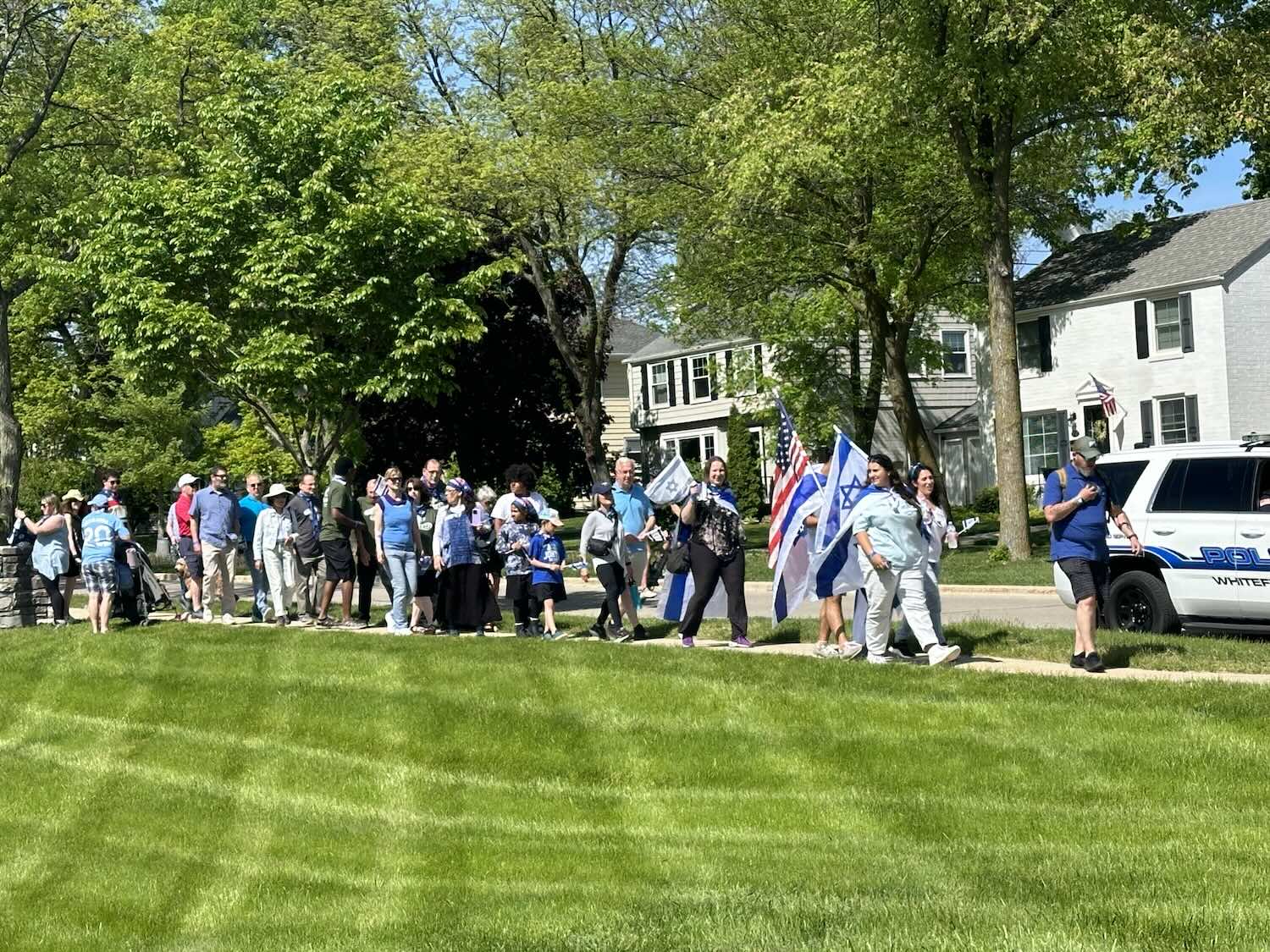
I’ve spoken often about my deep love for the Milwaukee Jewish community—about the way it stretches across all levels of observance, backgrounds, and perspectives. It’s something truly special.
But lately, I’ve noticed something that concerns me: a growing lack of respect when it comes to political views.
We are living in a time of incredible complexity. There is so much nuance, so much history, and so much to understand. As Jews, we have always been rooted in humanity—treating others with dignity, standing up for injustice, and advocating for what is right. It’s part of who we are.
During the Civil Rights Movement, Jews marched hand in hand with Martin Luther King Jr.. Jews helped spearhead labor unions—my own great-grandfather among them. We have always stood up for justice, not just for ourselves, but for others.
At the same time, we cannot forget to stand up for ourselves. History has taught us that staying quiet doesn’t protect us, and simply showing humanity is not always enough. There is a balance we must hold: advocating for others while also protecting our own people. And part of that responsibility includes holding ourselves accountable—speaking up even when a fellow Jew does something we believe is wrong.
Since the October 7 attacks, many Jews have been hurting in ways that are hard to fully articulate. It has changed us. For many, it has awakened a deep sense of generational memory and trauma—something that perhaps felt distant for those whose families experienced relative ease in recent decades.
For me, it sparked a desire to learn more—to read, to listen, to understand our history and how we got here.
We are a small people. And what pains me most is seeing us turn on each other.
We are a people.
We are known for debate—you ask three Jews a question, you’ll get five answers. But there is a difference between debate and disrespect. Calling each other out harshly, being judgmental, or tearing each other down—this gets us nowhere.
Just as we strive to respect people of other faiths and traditions, we must also extend that same openness within our own community—to Jews who practice differently, observe differently, and think differently.
I often hear conflicting criticisms about the same organizations—one person says it leans too far one way politically, another says it leans too far the other way. The reality is, our Jewish nonprofits are trying to represent a beautifully diverse and complex community.
If you don’t feel represented, speak up—but do so constructively. Share your perspective not in anger, but as part of the solution. It’s easy to judge from the outside. It’s much harder—and more meaningful—to engage from within, where the nuance truly lives.
This idea applies beyond our local community as well. The conversations around the Middle East are deeply nuanced, yet so often reduced to oversimplified, biased narratives. If we want to be understood, we must also be willing to understand.
We are a people of many backgrounds, but we are still one people. Social media fights, harsh comments, and public call-outs don’t strengthen us—they divide us.
When Noa Tishby spoke here, she was asked how to combat antisemitism. Her answer was simple: don’t fight it online—take it offline, make it human, make it real.
I believe the same applies within our own community. We are, at our core, a family. Families don’t always agree—but they listen, they care, and they find ways to move forward together.
So what does this have to do with food?
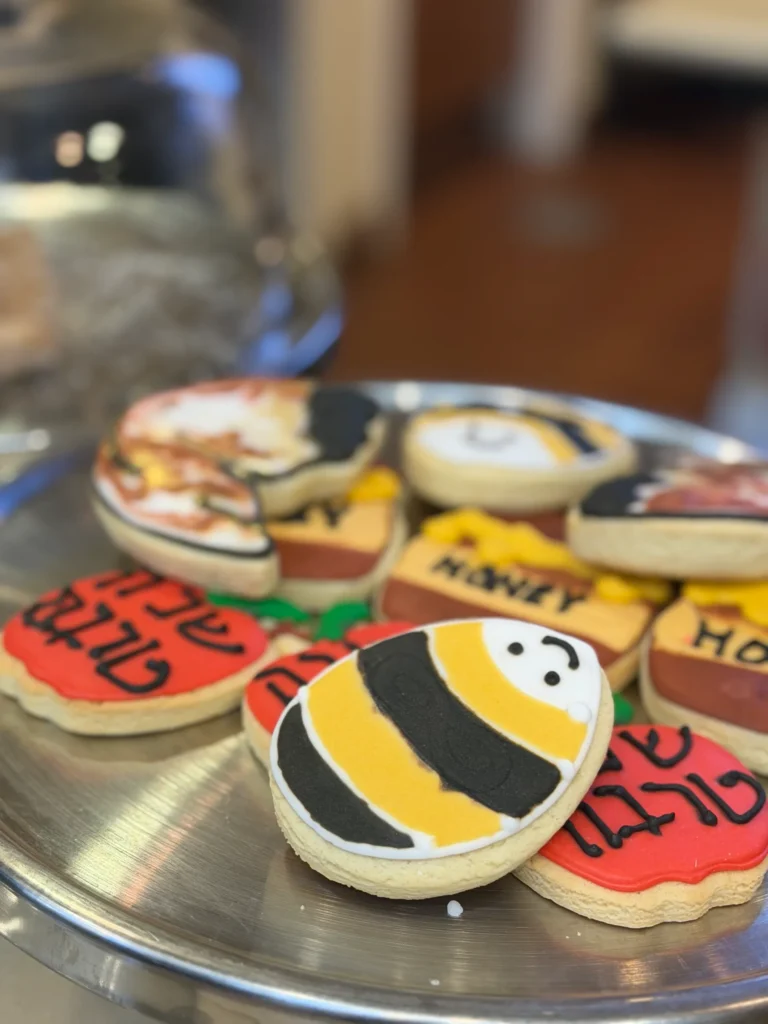
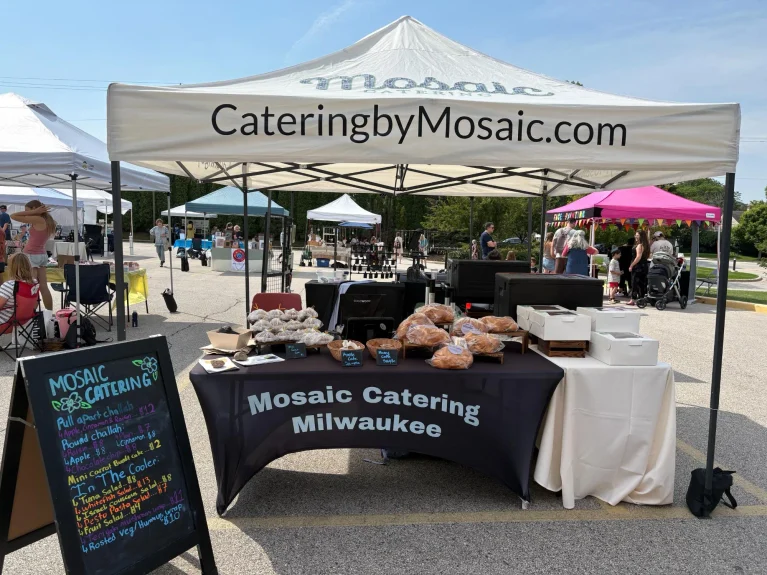
On the surface, maybe nothing. But for me, it has everything to do with Mosaic Catering.
We have the privilege of working with people from across the entire community—and we love that. We strive to represent the mosaic that makes our community what it is.
One of the reasons I’ve worked so hard to maintain kosher in Milwaukee is simple: Jews gather around food. And a gathering without food isn’t the same. Keeping food kosher allows everyone to sit at the same table. No one is excluded. And that matters.
Food, like Judaism, is deeply personal. Some people love tahini, others prefer hummus. Neither is wrong—it’s just different. And that’s okay.
We just came out of Passover, a holiday rooted in our journey from slavery to freedom. Imagine the desert—do you really think there weren’t disagreements? Different opinions? Debates? Of course there were. But they were still one people. They moved forward together, sometimes compromising, sometimes agreeing to disagree—but always remaining connected.
A personal moment
Recently, I posted in a group about the trend of shortening “bar/bat/b’nai mitzvah” to simply “mitzvah.” I felt that removing the full term strips away meaning—the word mitzvah on its own has a much broader definition than this specific and sacred milestone.
About 90% of people agreed. But one person responded with harsh, judgmental comments—criticizing how others practice Judaism. Ironically, he actually agreed with my original point—but his tone and approach completely overshadowed that.
I pointed it out: we were on the same side. But when we lead with judgment and negativity, we lose the ability to connect—even when we agree.
Moving forward
In a world filled with hate, ignorance, and extremism, let’s choose something different.
Let’s be thoughtful.
Let’s be kind.
Let’s be open to differences.
Judaism is not one-size-fits-all—it never has been. There are so many ways to be Jewish. And that diversity is not a weakness—it is our strength.
Because in unity—even with differences—we are stronger.